
 Image 1 of 6
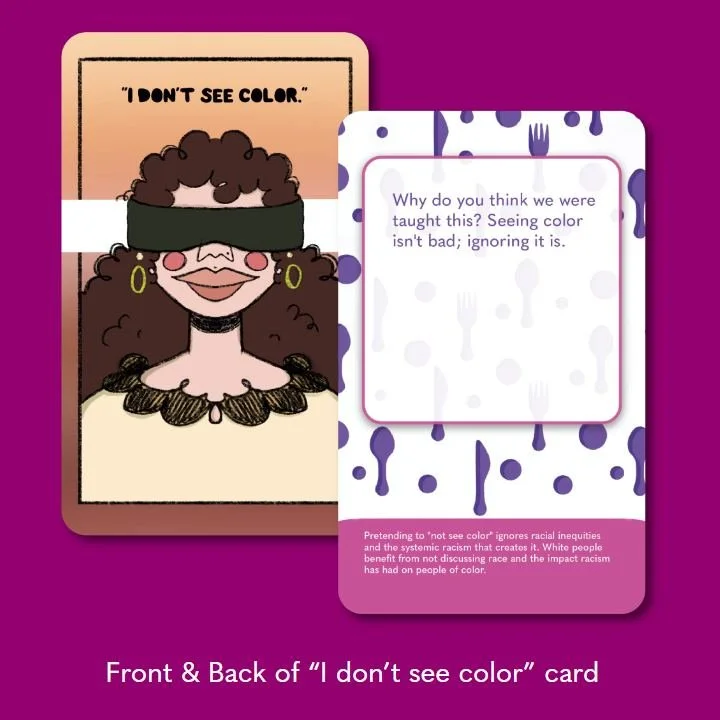 Image 2 of 6
 Image 3 of 6
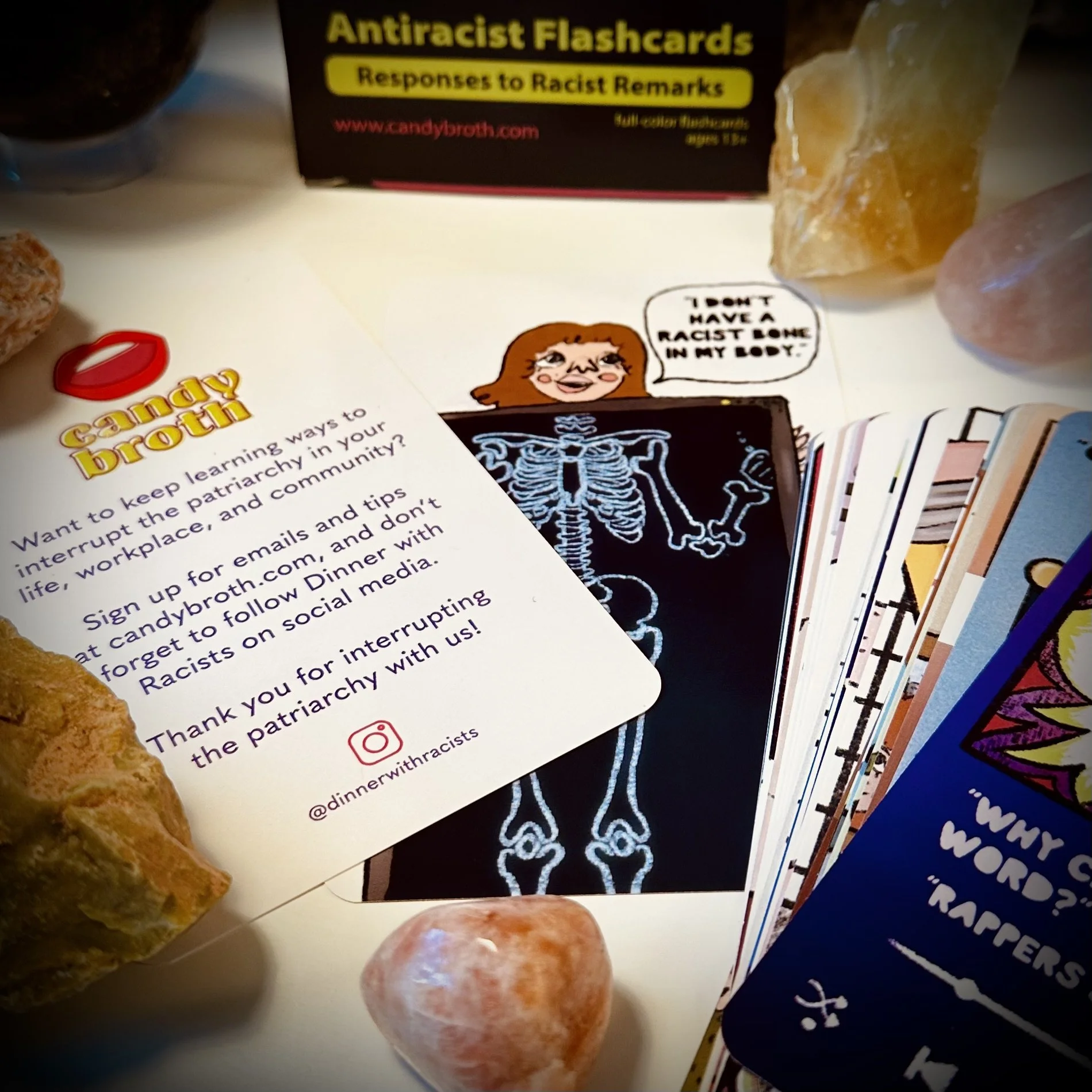 Image 4 of 6
 Image 5 of 6
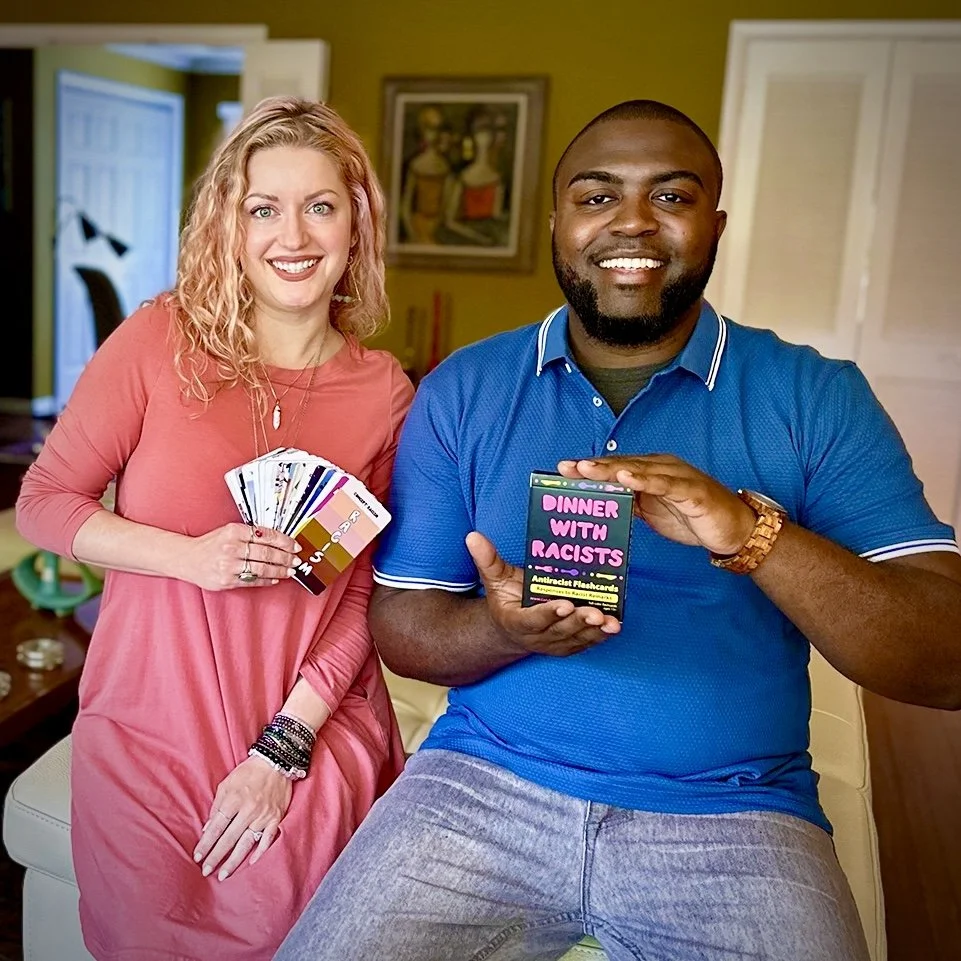 Image 6 of 6
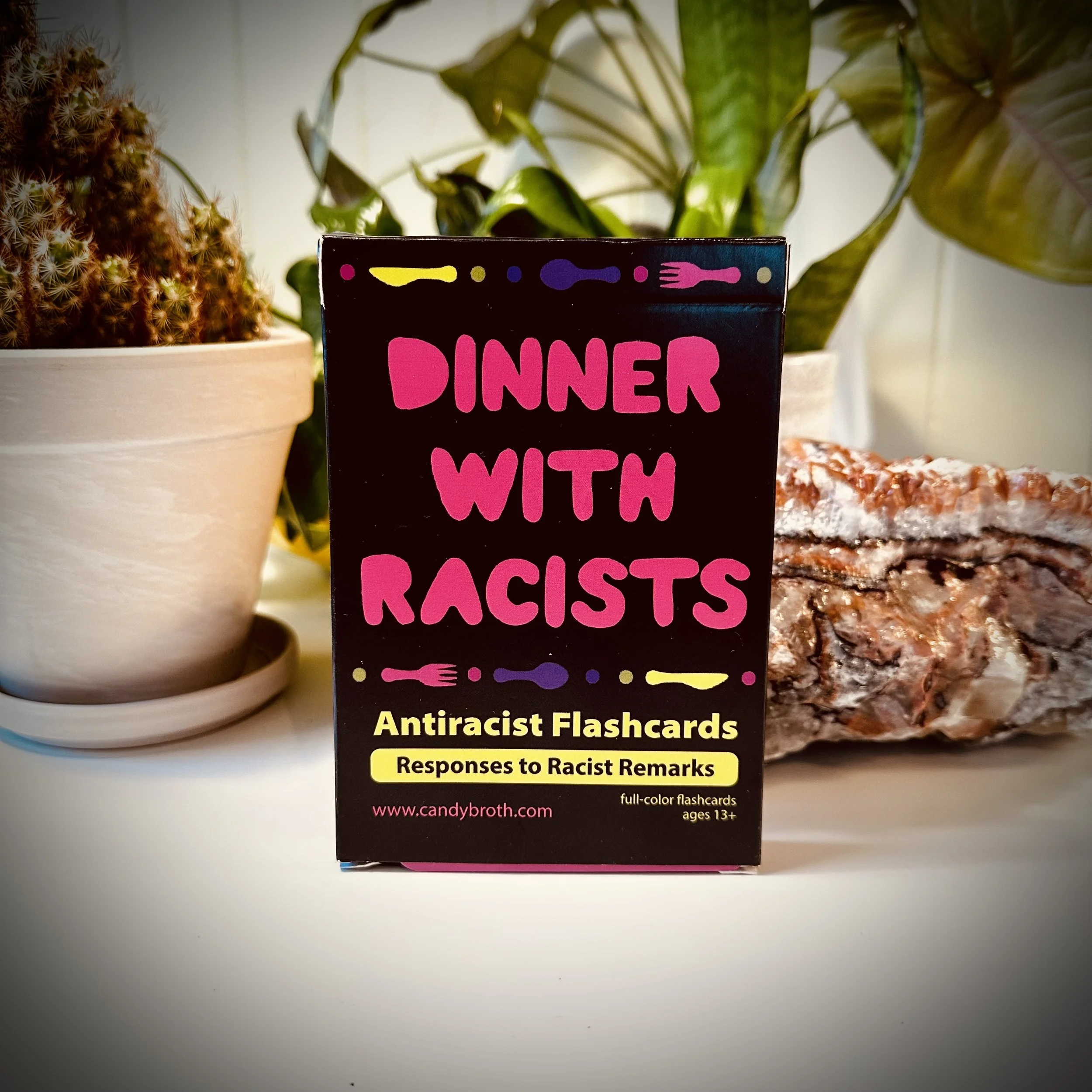
The Dinner with Racists flashcards were designed by candy broth for white women who wish to be antiracist and break with white solidarity. Every element of the cards was designed with antiracism and advocacy in mind. We’ve worked thoughtfully to put together this deck, and have intentionally chosen illustrators and design companies that are led by Black people and people of color, and whose organizations’ missions aligned with our anti-patriarchy values.
Why I developed the “Dinner with Racists” card set
How often have you gone to a family event, happy hour, or meeting and heard a joke or perspective that sounds suspiciously racist? Even allegedly ‘progressive’ folks say dumb, harmful things, particularly in predominantly ‘white’ spaces where it’s less likely they’ll be challenged as being “racist.” If you’re like me, you know it’s wrong. But you don’t know precisely how to interrupt and point out that something said is racist. Where do you start? And what do you say?
I had read several anti-racist books and was deep into data demonstrating poor health outcomes due to systemic racism. So, when a [white, female, ‘Christian’-identifying] relative began using language on my social-media page that was not only implicitly racist but also signaled the digital equivalent of ‘white women’s tears,’ I felt the weight of my responsibility to interrupt.
I wish I had some way to prepare myself to respond more quickly in the moment, I thought to myself. Like flashcards when I was studying in school! And that’s the moment I began developing the flashcard deck, Dinner with Racists. I knew others could use it too as a small act of being anti-racist.
Every element of the cards was designed with anti-racism and advocacy in mind.
How should I NOT use the Dinner with Racists flashcards?
The Dinner with Racists flashcards are to be used as a tool, not a weapon. Also—and this one is super important—they should not be used to ‘educate’ Black, Indigenous, and People of Color (‘BIPOC’).
Okay, but isn’t calling someone a “racist” a bit, well, strong? Most people aren’t trying to be racist, you know.
You’re right: Most white people aren’t trying to be racist, but they still are. How can white people not be in a country whose foundation was built upon—and has since thrived on—ranking individuals by skin color and ethnicity? People don’t ‘dabble’ in racism; in other words, you aren’t just ‘a little’ racist. Where you go (or don’t go), how you spend your money and time (or don’t), and how you vote and advocate (or don’t) speaks to your privilege.